PL · Outdoor Power and Light
Outdoor Socket Ratings and RCD Protection for Patios
Which socket rating and residual-current protection your patio equipment needs in wet conditions, how cables should be routed, and what to ask an electrician.
By Evening PatioPublished 860 wordsPL-001

A patio socket used for evening equipment should carry a splash-rated enclosure of at least IP44, be fed through a 30 mA residual-current device, and keep every connection off the ground and out of standing water. Those two decisions, rating at the socket and protection at the board, cover most of the risk that comes with running heaters, lamps and chargers outdoors. This article sets out what each choice means in plain terms, without giving installation steps.
Why does socket rating matter outdoors?
The rating describes two separate things, and it helps to read them apart. The IP figure has two digits: the first covers solid objects and fingers, the second covers water. A socket marked IP44 resists splashes from any direction, which is the practical minimum for a wall socket under an eave or behind a chair. A socket marked IP65 can take a jet of water, which is the rating to look for when the fixture sits in an open corner where wind-driven rain arrives sideways.
The second number that matters is the amperage of the socket itself. Patio heaters and kettles draw more current than a table lamp, so a 16 A outdoor socket is the common choice for power-hungry equipment, while 2 A or 5 A sockets suit lighting strings. Fitting a small socket to a heavy load means the socket becomes the weakest point of the circuit.
Covers and flaps add a layer but do not replace a rating. A hinged lid on an IP44 socket still opens to splash when a plug is inserted, so equipment that runs through a whole wet evening should be planned around a socket that tolerates that state. Our outdoor socket planning note sets out how these ratings sit within a wider electrical project and what to confirm before work begins.
Which residual-current protection matters for wet conditions?
A residual-current device, often called an RCD or a GFI, cuts the supply when current leaks through an unintended path, including through a person. The sensitivity is expressed in milliamperes. The 30 mA threshold is the one that appears in guidance for protecting people, and it is the standard expectation for sockets used outside, in bathrooms, and for any portable equipment handled with wet hands.
A 300 mA device offers a different service: it detects larger leakage and reduces the chance of fire caused by insulation faults, but it is not considered fast enough to protect a person directly. In practice, outdoor socket circuits are placed under 30 mA protection, either through a dedicated device in the distribution board or through a portable RCD used as a temporary measure. Manufacturer documentation for outdoor equipment states which protection it expects, and that document decides the question when the two disagree.
Published guidance from the UK Health and Safety Executive on electricity at work makes the same point in a different context: outdoor and portable equipment needs residual-current protection because moisture and damaged insulation make contact faults more likely.
How should cable routing cross a patio?
Routing is where outdoor installations usually go wrong, because the path is chosen for convenience rather than for exposure. Three rules cover most situations.
First, keep plugs and joints above the level where water pools. A connector lying in a puddle after rain is a fault waiting to happen, so cables should run along walls, under rails, or on brackets rather than across paving.
Second, protect the cable from physical damage. A cable stepped on, moved by furniture, or pinched by a gate will have its insulation compromised. Where a cable must cross a walking line, a rated cover or a routed channel avoids that wear; where it cannot be protected, the route should change instead.
Third, allow for movement and heat. Outdoor cables serving heaters should be rated for the temperature they will see, and slack should be left where the cable passes through a wall so the seal stays intact.
What equipment belongs on an outdoor circuit?
Equipment selection follows the same logic as the socket. Portable patio heaters, pumps, power tools and kettles are treated as higher risk because they move and are handled. Lighting that stays fixed in position is lower risk, but its supply still passes through the same outdoor sockets if it is plugged in.
Check three markings on each item: the manufacturer's outdoor use statement, the plug type suited to the socket, and the current it draws. If the total of everything running at once approaches the circuit's limit, the circuit, not the appliance, needs attention.
What should you ask before the work starts?
A short set of questions keeps the conversation concrete:
- Which IP rating is this socket, and where exactly will it sit relative to rain and splash?
- Which device in the board protects this circuit, and is its sensitivity 30 mA?
- How will the cable cross the walking area, and what happens to it in winter?
- What happens if the equipment is left plugged in during heavy rain?
Those answers are checkable against the markings on the parts and against the documentation supplied with them, which is what makes them useful before anyone signs anything.
Reading notes
Next on the programme
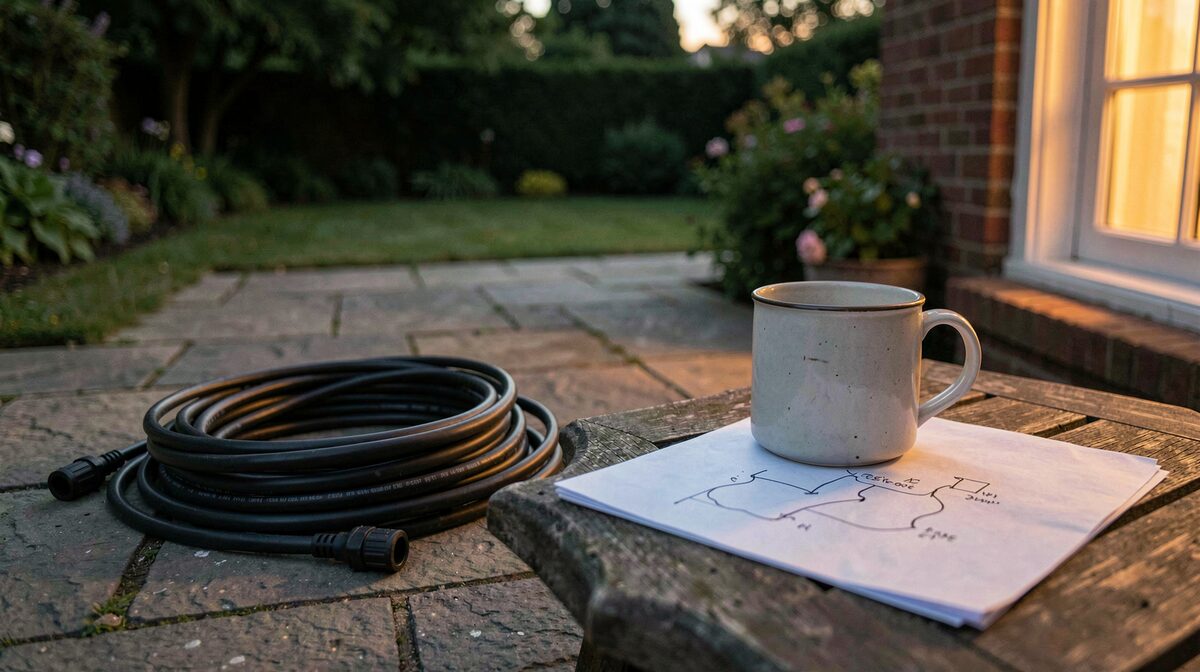 PL-003 · Outdoor Power and LightPlanning Outdoor Cable Runs for Evening Patio Power
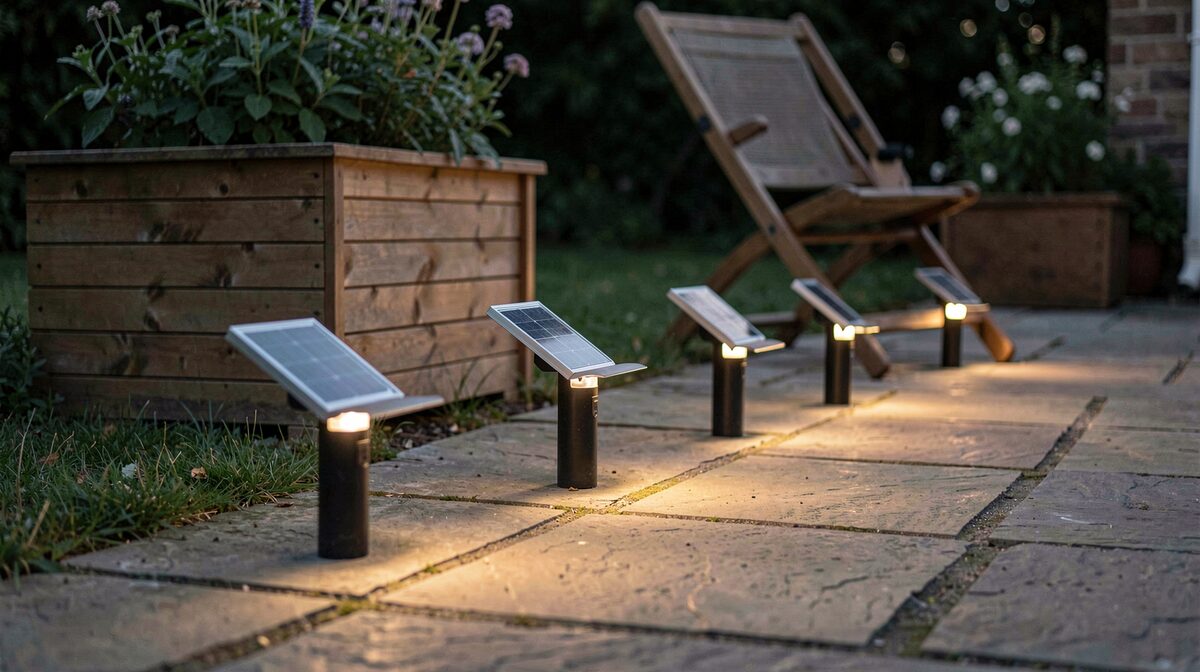 PL-002 · Outdoor Power and LightSolar Garden Lights: How Long They Last
 OC-003 · Outdoor ComfortLow Planting and Windbreaks on an Evening Terrace


